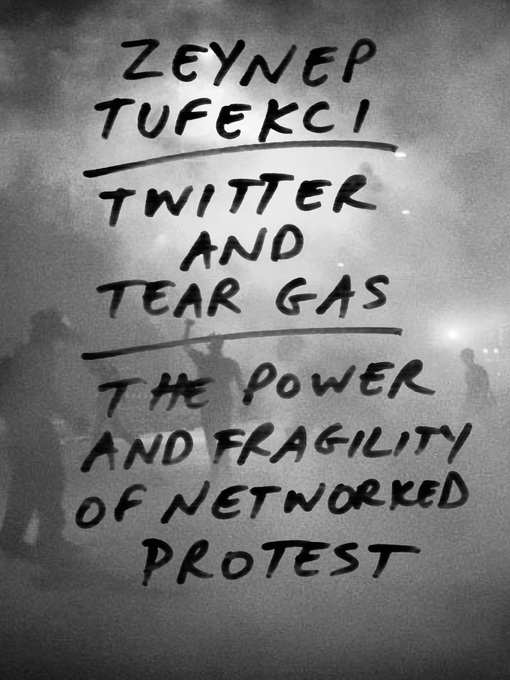
A firsthand account and incisive analysis of modern protest, revealing internet-fueled social movements' greatest strengths and frequent challenges
To understand a thwarted Turkish coup, an anti–Wall Street encampment, and a packed Tahrir Square, we must first comprehend the power and the weaknesses of using new technologies to mobilize large numbers of people. An incisive observer, writer, and participant in today's social movements, Zeynep Tufekci explains in this accessible and compelling book the nuanced trajectories of modern protests—how they form, how they operate differently from past protests, and why they have difficulty persisting in their long-term quests for change.
Tufekci speaks from direct experience, combining on-the-ground interviews with insightful analysis. She describes how the internet helped the Zapatista uprisings in Mexico, the necessity of remote Twitter users to organize medical supplies during Arab Spring, the refusal to use bullhorns in the Occupy Movement that started in New York, and the empowering effect of tear gas in Istanbul's Gezi Park. These details from life inside social movements complete a moving investigation of authority, technology, and culture—and offer essential insights into the future of governance.
- Psychology
- Religion and Spirituality
- Politics and Political Science
- Science, Tech, Engineering, and Math
- LBGTQIA+ and Gender Studies
- Art and Architecture
- Sociology and Social Science
- Education and Pedagogy
- See all arts & sciences collections
- Top Titles in Business
- Finance and Economics
- Business, Leadership, and Management
- See all business collections
- Local History
- True Crime
- Historical Biographies and Memoirs
- World History
- Miltary and Wartime History
- American History
- See all history collections
- Healthcare
- Nursing & Medical
- Data Breach: Cybersecurity and Privacy
- Science, Tech, Engineering, and Math
- See all stem collections
